
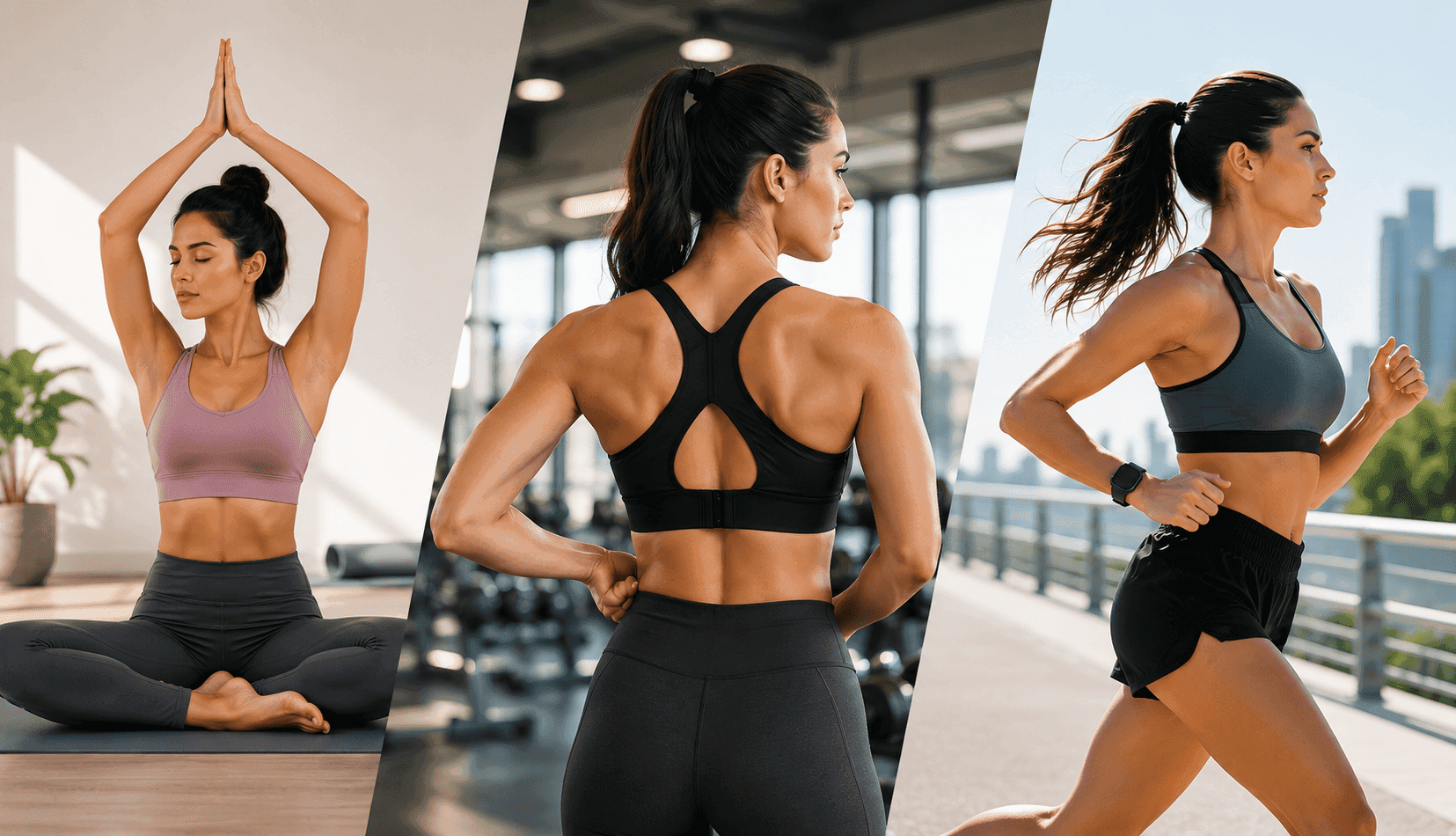
Introduction
Finding the right sports bra is just as important as choosing the right pair of workout shoes. Whether you’re practicing yoga, lifting weights at the gym, or going for a morning run, the level of support your body needs changes depending on the activity. A sports bra that feels comfortable during a yoga class may not provide enough support for running, while a high-impact sports bra designed for intense workouts may feel unnecessarily restrictive during stretching exercises.
Choosing the right sports bra can improve comfort, enhance workout performance, and reduce unnecessary strain on your body. Many women invest in quality activewear but overlook the importance of selecting a sports bra designed for their specific fitness routine.
In this guide, you’ll learn how to choose the right sports bra for yoga, gym workouts, and running. We’ll cover support levels, fit, fabric choices, common buying mistakes, and practical tips to help you make a better purchasing decision.
Why the Right Sports Bra Matters
A sports bra is designed to minimize breast movement during exercise and provide the support needed for different levels of physical activity. Unlike regular bras, sports bras are specifically engineered to offer stability, improve comfort, and help prevent discomfort during workouts.
According to research conducted by the University of Portsmouth’s Breast Health Research Group, breast movement occurs in multiple directions during physical activity. Without proper support, excessive movement may lead to discomfort and negatively affect exercise performance.
The right sports bra can make a noticeable difference in your workout experience. It can help reduce irritation, improve confidence during movement, and provide better overall support throughout your fitness routine.
Understanding Sports Bra Support Levels
Not all workouts require the same amount of support. Sports bras are generally categorized into three levels of support: low, medium, and high impact.
Low-support sports bras are best suited for activities such as yoga, stretching, and Pilates. These exercises involve controlled movements and prioritize flexibility and comfort over compression and maximum support.
Medium-support sports bras are ideal for strength training, walking, cycling, and moderate gym workouts. They provide a balanced combination of support and mobility, making them a versatile option for many fitness enthusiasts.
High-support sports bras are specifically designed for running, high-intensity interval training, and other exercises that involve repetitive or high-impact movements. These styles focus on minimizing movement and maintaining comfort during vigorous activity.
Understanding which category your workouts fall into is the first step toward choosing the right sports bra.
How to Choose the Right Sports Bra for Yoga
Yoga emphasizes flexibility, controlled breathing, and fluid body movements. During yoga sessions, comfort and unrestricted movement are often more important than maximum support.
A good yoga sports bra should feel lightweight and breathable. Soft, stretchable fabrics allow for better mobility during poses that require bending, twisting, and reaching. Designs with racerback straps or seamless construction are particularly comfortable during longer sessions.
Low-impact support is usually sufficient for yoga practitioners. The goal is to provide gentle support without limiting movement or creating unnecessary pressure around the chest.
Breathability is another important consideration. Moisture-wicking materials can help keep you comfortable during hot yoga or longer practice sessions. Since yoga often involves extended periods of wear, choosing a sports bra made from soft, skin-friendly materials can significantly improve your overall experience.
Choosing the Right Sports Bra for Gym Workouts
Gym workouts can vary greatly depending on your training style. Strength training, functional fitness, resistance exercises, and moderate cardio all require different levels of support.
For traditional weight training and resistance workouts, a medium-support sports bra is generally the best option. It offers enough support without compromising comfort or flexibility.
If your gym routine includes dynamic movements such as jump squats, burpees, or circuit training, you may benefit from a high-support sports bra instead.
When shopping for gym wear, adjustable features can be particularly useful. Adjustable shoulder straps and hook-and-eye closures allow for a more personalized fit and can improve long-term comfort. These features also make it easier to accommodate slight changes in body measurements over time.
Another factor to consider is the construction of the sports bra itself. Compression sports bras press the breasts closer to the chest wall and are commonly used for lower-impact activities or smaller cup sizes. Encapsulation sports bras provide individual support for each breast and are often preferred for higher-impact exercises and larger cup sizes.
Many premium sports bras combine both compression and encapsulation technologies to provide superior support during workouts.
How to Choose the Right Sports Bra for Running
Running is one of the highest-impact forms of exercise when it comes to breast movement. This makes support the most important factor when selecting a sports bra for running.
High-impact sports bras are specifically designed to minimize movement while maintaining comfort throughout your run. The right fit should feel secure without restricting breathing or causing discomfort around the shoulders and rib cage.
Sports bras designed for runners often feature moisture-wicking fabrics and strategically placed ventilation panels. These materials help manage sweat and improve airflow during longer training sessions.
If you frequently participate in running or high-intensity workouts, investing in a high-quality sports bra is well worth considering. The additional support can significantly improve comfort, particularly during longer distances or repetitive movement.
The fit should remain stable throughout your workout. If you’re constantly adjusting straps or feeling excessive movement while running, it’s usually a sign that your sports bra isn’t providing adequate support.
Finding the Perfect Fit
Even the best sports bra won’t perform well if it doesn’t fit properly.
A properly fitted sports bra should feel snug but comfortable. The band should sit level around your torso without riding up during movement. Shoulder straps should stay in place without digging into your skin, and the fabric should provide support without restricting your breathing.
Many women unknowingly wear the wrong bra size. Fitness and lingerie industry studies consistently suggest that incorrect sizing remains one of the most common issues when purchasing sports bras.
When shopping for a new sports bra, always consult the manufacturer’s size chart. Sizing can vary between brands, and relying solely on your regular bra size may not always provide the best fit.
Trying on different styles can also make a significant difference. Some individuals find compression styles more comfortable, while others prefer encapsulation designs depending on their body shape and preferred activities.
Fabric and Material Considerations
Fabric quality plays an important role in both comfort and durability.
Modern sports bras are typically made using performance fabrics designed to manage sweat and improve breathability. Materials such as polyester blends, nylon, and elastane offer excellent stretch and moisture control while maintaining their shape after repeated use.
Quick-drying fabrics are particularly beneficial for individuals who exercise frequently or participate in high-intensity workouts. Breathable materials can also help reduce irritation during extended training sessions.
Choosing high-quality materials often results in better long-term performance and durability.
Common Mistakes to Avoid
One of the biggest mistakes people make is purchasing a sports bra based solely on appearance. While style certainly matters, support and fit should always be the primary considerations.
Another common mistake is using the same sports bra for every workout. Different activities place different demands on your body, making activity-specific sports bras a worthwhile investment.
It’s also important to recognize when a sports bra needs replacing. Over time, elastic materials lose their ability to provide adequate support. If the band feels stretched out or the fabric no longer maintains its shape, it may be time for a replacement.
Practical Buying Tips
Before purchasing a sports bra, consider the types of workouts you perform most often. Matching the support level to your activity is one of the easiest ways to improve comfort and performance.
Investing in multiple sports bras for different activities can also be beneficial. A low-impact option for yoga and a high-support style for running will typically provide better results than trying to use one product for every workout.
According to sports bra research, proper support not only improves comfort but may also encourage greater participation in physical activity by reducing exercise-related discomfort.
Conclusion
Learning how to choose the right sports bra for yoga, gym, and running doesn’t have to be complicated. The most important factors are understanding your activity level, choosing the appropriate support category, and ensuring a proper fit.
Yoga calls for flexibility and comfort, gym workouts generally benefit from medium support, and running requires maximum stability and support. Paying attention to fabric quality, construction, and sizing can make a significant difference in both comfort and workout performance.
A well-fitted sports bra is more than just a piece of activewear—it’s an essential part of your fitness wardrobe that supports your body through every movement.